
Every major sales methodology in use today was built for a buyer who no longer exists.
That is not an exaggeration. It is a structural observation. The assumptions behind SPIN, Challenger, Sandler, Miller Heiman, and MEDDIC were made in eras when the seller controlled information, guided the conversation, and owned the insight advantage. Those eras are over, and I think anyone running a complex sales team in 2026 already feels it.
The methodologies themselves still contain useful principles. But the foundations they were built on have shifted, and the gap between the playbook and the reality is widening every quarter.
The short answer: buyers now arrive at the first sales conversation having already done most of the work the seller used to be paid to do.
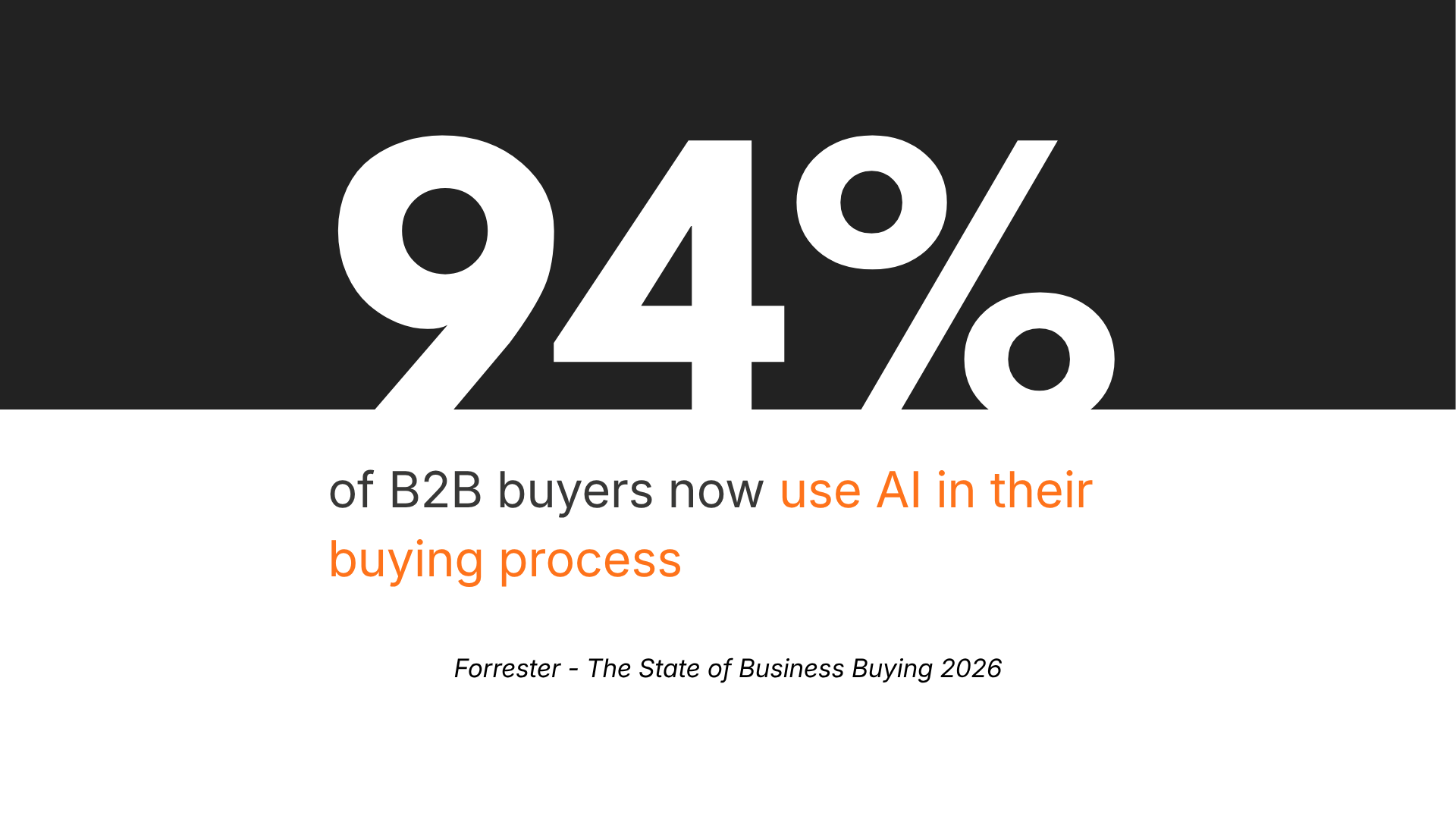
According to Forrester’s Buyers’ Journey Survey 2025,
94% of B2B buyers now use generative AI in at least one area of their purchasing process.
That is up from 89% the year before. More striking, twice as many buyers named generative AI or conversational search as a more meaningful or important source of information than any other source, including the seller.
Two more numbers from the same research are worth holding in mind:
Put those three numbers together and you get a clear picture of the modern buyer. Deeply informed before the first call. Surrounded by a buying group that the seller will probably never meet in full. Unwilling to commit without proof.
This is not the buyer SPIN was designed for. It is not the buyer Challenger was designed for. It is not the buyer MEDDIC was designed to qualify.
It helps to put this in context. Sales methodology has moved through three broad eras.
The Tell Era, roughly pre-2000. The seller owned the information. Buyers relied on salespeople to learn about products, markets and competitive alternatives. SPIN Selling, Solution Selling and Miller Heiman were built for this world. They assumed the seller had something the buyer could not easily get elsewhere.
The Challenge Era, roughly 2000 to 2020. The seller brought insight. Buyers had access to more information, but the best sellers could still surprise them with research, reframe their thinking and guide the conversation. Challenger Sale, JOLT and the more rigorous applications of MEDDIC belong to this period.
The AI Era, now. The buyer arrives already deeply informed. They have used AI to research competitors, benchmark pricing, read customer reviews and compare alternatives before the first call. The information asymmetry that every previous methodology relied on has collapsed.
Each era had its right answer. The methodologies were not wrong. They were right for the world they were built in.
Because each one is built on an assumption that no longer holds.
SPIN assumes the seller can uncover needs the buyer has not yet articulated. In a world where buyers have spent weeks researching their problem with AI before the first call, the needs are already articulated, often in more detail than the seller is ready for.
Challenger assumes the seller can teach the buyer something they did not know. That still happens, but it is harder. The buyer has often already read the same insights the seller is about to deliver, sometimes generated by the same AI tools.
MEDDIC assumes the seller can qualify their way to the right opportunities through disciplined questioning. The qualification logic still has value. But MEDDIC was built for a world where the seller drove the cadence of the conversation. In a buyer-led process with 22 stakeholders involved, the seller is not driving cadence. They are responding to it.
I am not saying these methodologies are worthless. The qualification discipline of MEDDIC still matters. The insight orientation of Challenger still matters. The questioning structure of SPIN still has value in early conversations. But as complete frameworks for running a complex commercial process, they are showing their age.
In my experience, three things.
A facilitator, not a teacher. The seller’s role has shifted from holding the answers to helping a buying group reach a shared answer. That means surfacing the right evidence at the right time, helping the group navigate internal disagreement, and protecting the relationship through the long stretches when the seller is not in the room.
Proof, not pitch. With 60% of buyers expecting a trial of some form before committing, the modern sales process is less about presenting and more about proving. The seller who shows up with a polished deck and a pricing sheet is increasingly out of step with how buyers want to evaluate.
A path through the buying group, not a path to a single decision-maker. The 13-stakeholder figure is the one that should worry most commercial leaders. Legacy methodologies were built to identify the economic buyer and influence them. They were not built to navigate consensus across more than two dozen people, most of whom the seller will never speak to directly.
Two things, in my view.
One: conversion rates and cycle times are going to keep getting worse for businesses still running legacy playbooks. If the methodology assumes the seller controls a conversation that the buyer is actually controlling, every deal is harder than it needs to be. Sellers will feel it as longer cycles, more stakeholders appearing late, more deals stalling at the proof stage.
Two: the businesses that recognise this shift early will have a structural advantage. Not because they have better salespeople, but because their commercial approach is built for the buyer who actually exists in 2026. A methodology aligned to how buyers now operate will outperform a better-trained team running the wrong playbook.
The question is not whether to abandon what came before. The qualification rigour, the insight orientation, the questioning discipline are all still useful. The question is whether to keep relying on a methodology built on assumptions that no longer hold, or to adopt one built for the world buyers are actually operating in today.
I sometimes think we have been kinder to old sales methodologies than they have been to us. They have shaped how thousands of sales teams sell, how millions of deals have been run, and how a generation of sales leaders learned the trade. That history deserves respect.
But respect for what came before is not the same as continuing to use it after the foundations have shifted.
The buyer has changed. The methodology has not. That gap is where deals are being lost.
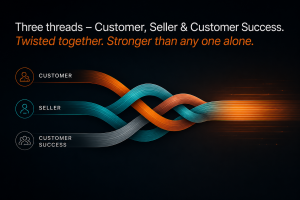
We have built our response to this shift into a methodology called CORD: Collaborate, Outcomes, Refine, Deliver. It is designed for modern buyers, larger buying groups and the expectation of proof before commitment. You can read more about CORD here.
If you would like to talk through how your commercial approach is holding up against the modern buyer, get in touch with the Sales Engine team. We would be happy to walk through it with you.
Steve Robinson is CEO of Sales Engine.